


25,000+ reviews
Best price:
€26.50

5,700+ reviews
Best price:
€63


500+ reviews
Best price:
€69

150+ reviews
Best price:
€130


1,500+ reviews
Best price:
€120
Explore the Uffizi Gallery at your own pace with Individual Tickets. Ideal for art enthusiasts, these tickets grant access to a stunning collection of masterpieces, including works by Botticelli, Leonardo da Vinci, and Raphael. For a more enriching experience, audio guides are available to provide fascinating insights into the gallery's remarkable history and artworks. Enjoy a personal, self-guided tour through one of Italy’s most iconic cultural landmarks and immerse yourself in the world of Renaissance art.

At the Uffizi Gallery, reduced tickets are available for EU citizens aged 18 to 25 at a special rate. Free entry is offered to visitors under 18, along with specific categories, such as teachers, students, and other eligible groups. Valid identification is required to verify eligibility for reduced and free admission. For a complete list of eligible categories and more details, please visit the official website.
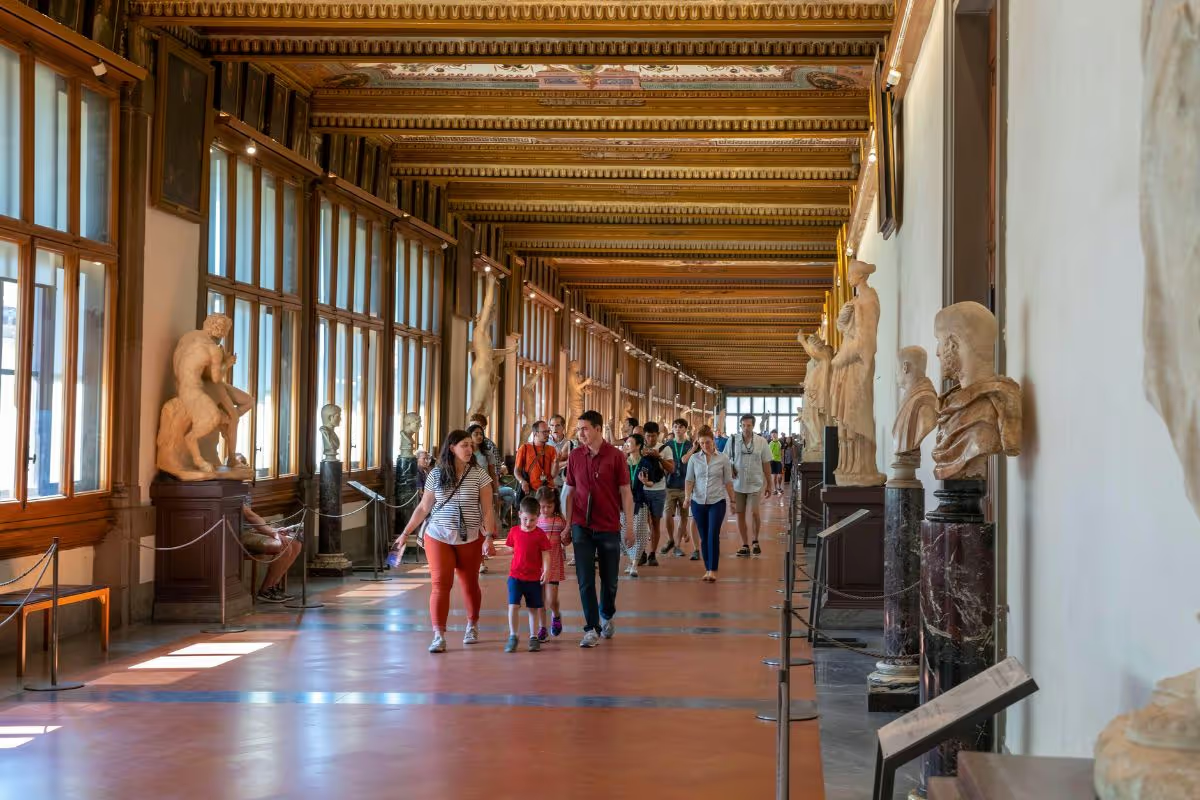
A guided visit to the Uffizi Gallery is the ideal way to explore its exceptional collection of Renaissance masterpieces. With a knowledgeable guide, you’ll discover the fascinating stories behind works by artists like Botticelli, Leonardo da Vinci, and Michelangelo. Expert storytelling brings these masterpieces to life, offering a deeper understanding of Florence’s rich artistic heritage. A guided tour ensures you won’t miss any essential details while enhancing your visit for a memorable experience.


The Uffizi Gallery is open all year from 8:15AM to 6:30PM.
The last entrance to the Uffizi Gallery is one hour before closing time.
The Uffizi Gallery is closed on the 25th of December and the 1st of January, and on every Monday throughout the year.
The average visit to the Uffizi Gallery lasts between 2 and 3 hours, which is enough to admire its most famous masterpieces. If you're particularly interested in Renaissance art, you might want to schedule extra time to explore the extensive collection in greater depth.
The Uffizi Gallery is located in Piazzale degli Uffizi 6, Florence, Italy.
The Uffizi Gallery has a main entrance located at Piazzale degli Uffizi. Upon arrival, visitors will find ticket checkpoints and must pass through a security inspection to ensure everyone’s safety.
Once inside, the museum spans multiple floors, accessible via staircases and elevators. Please note that the gallery does not have a cloakroom, so visitors carrying large backpacks or suitcases will not be allowed entry.

Visitors are only allowed to take water bottles of maximum 0.5 liters inside the museum, but you will have plenty of different options to grab a bite just outside the museum. The city center of Florence offers a wide array of restaurants and street food carts that serve one of the most renowned local cuisines in the world.
The Uffizi Gallery is fully wheelchair accessible, with elevators connecting different floors to ensure ease of movement for all visitors. The museum also features accessible restrooms and two bookshops where guests can browse a selection of art-related publications and souvenirs. Audioguides are available at the entrance, and visitors can also access a downloadable PDF guide that include a museum map and historical information about the gallery.

If you're visiting the Uffizi Gallery in Florence, there are plenty of must-see attractions nearby. Just steps away is Piazza della Signoria, home to the imposing Palazzo Vecchio and an open-air gallery of sculptures, including a replica of Michelangelo’s David and Cellini’s Perseus with the Head of Medusa. A short walk leads to the stunning Florence Cathedral (Duomo), where you can admire Brunelleschi’s dome, Giotto’s Campanile, and the Baptistery of San Giovanni. Another highlight is the historic Ponte Vecchio, lined with charming jewelry shops and offering picturesque views of the Arno River.
For those eager to explore more Renaissance art, the nearby Pitti Palace and Boboli Gardens provide a grand display of Medici history and culture. When you’re ready for a break, the lively area around Piazza della Repubblica and Via de’ Tornabuoni offers an excellent selection of cafés, traditional trattorias, and luxury boutiques. To experience local flavors, the Mercato Centrale in San Lorenzo is a top spot for Tuscan specialties and a vibrant dining experience.

Founded in 1581 by Grand Duke Francesco I de’ Medici, the Uffizi Gallery stands as one of the most significant art museums in the world. Originally conceived as administrative offices for Florentine magistrates, it evolved into a treasure trove of Renaissance masterpieces, showcasing the Medici family's vast artistic legacy. The gallery's purpose was to cement Florence’s role as a cultural epicenter.
The Uffizi’s curatorial approach blends historical authenticity with modern conservation techniques, enhancing visitor engagement while safeguarding its priceless collection. This balance ensures that the gallery continues to offer an immersive and educational experience.
The Uffizi Gallery in Florence is an architectural masterpiece that blends Renaissance grandeur with modern functionality. The building, designed by Giorgio Vasari, features an elegant façade and a series of spacious galleries that flood with natural light.
Inside, visitors are immersed in an environment where historic art and architecture harmonize, with beautifully preserved frescoes, intricate detailing, and a sense of timeless beauty. This unique setting invites exploration of Florence’s rich cultural heritage in a welcoming, accessible atmosphere.
The Birth of Venus by Sandro Botticelli is one of the most celebrated masterpieces of the Uffizi Gallery. This iconic painting captures the goddess Venus emerging from the sea on a shell, symbolizing beauty, love, and divine creation. The flowing lines, soft pastel hues, and ethereal quality of the figures create a dreamlike atmosphere.
The delicate interplay of movement and stillness, as seen in the fluttering drapery and serene expression of Venus, invites contemplation of Renaissance ideals and the poetic nature of Botticelli’s art.
Medusa by Caravaggio stuns viewers with its dramatic realism and psychological intensity. Painted on a convex wooden shield, the work depicts the severed head of Medusa, her mouth frozen in a silent scream as snakes coil in her hair. The artist’s use of chiaroscuro amplifies the sense of depth and movement, making the scene appear almost three-dimensional.
Caravaggio’s ability to capture raw emotion and physicality transforms myth into an unsettling yet mesmerizing masterpiece, reflecting his unparalleled skill in evoking human vulnerability and fear.
Annunciation by Leonardo da Vinci and Andrea del Verrocchio offers a striking display of technical mastery and symbolic depth. The painting captures the angel Gabriel delivering the divine message to the Virgin Mary, her poised yet startled expression highlighting the moment’s significance.
The meticulous rendering of light, perspective, and botanical details showcases Leonardo’s early fascination with nature and scientific observation. The composition’s harmonious balance between architecture and landscape adds depth, making it a captivating testament to Renaissance innovation.

